Nina Horowitz Blog + YouTube Thumbnail

Coffee with a Founder Podcast: Nina Horowitz, ImmuneBridge

Today, Beck Bamberger sits down with Nina Horowitz, CEO of ImmuneBridge and a Stanford-trained scientist using AI and stem cell engineering to develop the next generation of cell therapies.

ImmuneBridge is working to make potentially life-saving treatments safer, more scalable, and significantly more affordable. By applying machine learning to identify the most promising umbilical cord blood donors, the company aims to reduce the cost and complexity of manufacturing therapies for severe diseases such as leukemia.

Nina shares how she transitioned from research scientist to CEO, what she has learned about aligning a team around a clear roadmap, and how ImmuneBridge is adapting to a rapidly evolving medical landscape. From communicating complex science and managing ADHD to preserving the human element in healthcare, this conversation explores what it takes to lead a venture-backed biotech company—and turn treatments that once seemed impossible into tomorrow’s routine.

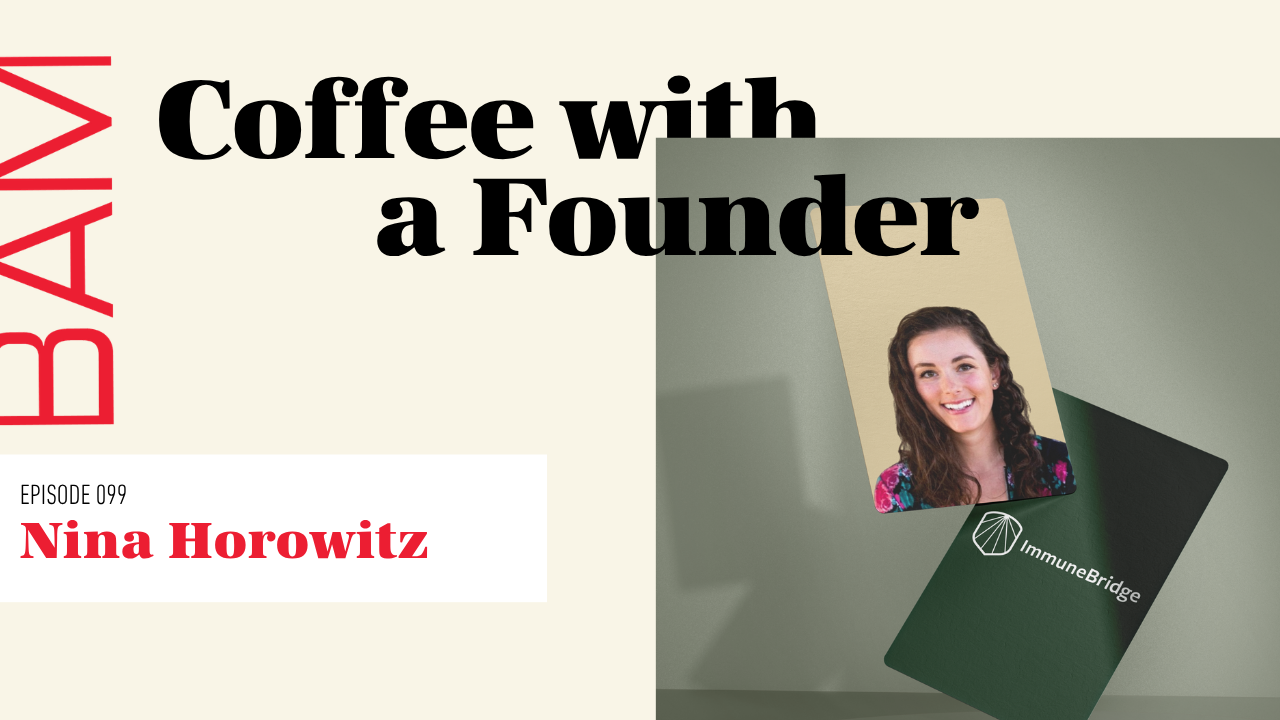
show notes:

00:00 - Machine learning in cell therapy

04:50 - Deciding between academia and industry

09:09 - Clarifying the team's roadmap

12:44 -  Adjusting strategy in cell therapy

16:41 - Learning to rely on reminders

19:47 - Unique college class experience

22:26 - The importance of the human element

24:18 - Pet's eye doctor visit

18:48 Importance of surgeon partnerships

19:46 Surgeons' need for better tools

23:32 Healthcare consolidation trends

Read More About The Episode:


00:00 — Using machine learning to transform cell therapy
Nina introduces ImmuneBridge’s work at the intersection of AI, stem cell engineering, and next-generation cell therapies. The company uses machine learning to identify the most promising umbilical cord blood donations from more than 800,000 potential units, with the goal of manufacturing safer, more accessible treatments at scale and eventually reducing costs to below $10,000 per dose.

04:50 — Deciding between academia and industry
After completing her PhD, Nina considered several paths: remaining in academia, joining an established company, founding something herself, or entering an early-stage startup. She shares how her scientific background, incubator experiences, and willingness to learn the business side of biotechnology ultimately led her from research lead to chief scientific officer and then CEO of ImmuneBridge.

09:09 — Clarifying the team’s roadmap
Becoming CEO taught Nina that understanding the company’s direction herself wasn’t enough, she had to communicate it clearly and repeatedly. She discusses embracing the role of “chief repeating officer,” documenting the roadmap, and helping every team member see how their daily responsibilities contribute to ImmuneBridge’s larger mission.

12:44 — Adjusting strategy in a changing cell-therapy landscape
ImmuneBridge’s competitive strategy has evolved alongside the industry. Nina explains how the company initially focused on improving upon patient-specific cell therapies but is now considering emerging in-vivo technologies and identifying the areas where donor-derived therapies can offer the greatest advantage.

16:41 — Learning to rely on reminders
While managing ADHD and the demands of leading a biotech company, Nina has learned not to depend on memory alone. She writes everything down, sets reminders, and uses pen and paper to reinforce important information—while remaining cautious about outsourcing too much thinking and recall to AI tools.

19:47 — How an unusual college class shaped her leadership
Nina reflects on her liberal arts education and the value of small, discussion-based tutorials in which students had to explain and defend their ideas directly. That experience strengthened her ability to think critically, write clearly, communicate complex concepts, and respond thoughtfully under pressure—skills she now uses regularly as a CEO.

22:26 — Preserving the human element in science
Scientific breakthroughs require more than strong data; they also require stories that connect with patients, investors, and the public. Nina explains why biotech leaders must communicate the human stakes behind their work and shares her vision of a future in which treatments that seem extraordinary today become routine, affordable, and widely accessible.

24:18 — A visit to the pet eye doctor
The conversation closes on a personal note as Nina shares that her pet had recently visited an eye doctor. The lighthearted exchange offers a glimpse of life outside the laboratory and reinforces the human connection at the heart of the conversation.

Coffee with a Founder Podcast: Nina Horowitz, ImmuneBridge

Today, Beck Bamberger sits down with Nina Horowitz, CEO of I...

Coffee with a Founder Podcast: Oliver Keown, Oath Surgical

Today, Beck Bamberger sits down with Oliver Keown, CEO and f...

Coffee with a Founder Podcast: Ali Fawad/Habab Idrees, Farmevo

Today, Beck Bamberger sits down with Ali Fawad and Habab Idr...